CBE Professors Co-author New Book on Dissipative Particle Dynamics
A new book, Dissipative Particle Dynamics: Fundamentals and Applications of Soft Matter Science and Engineering, by Department of Chemical and Biochemical Engineering Distinguished Professor Alexander Neimark and Assistant Research Professor Santo Kolattukudy, was published in November 2025 by Academic Press/Elsevier.
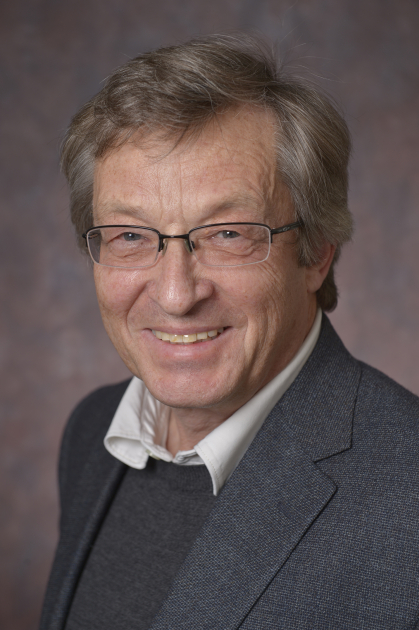
Their comprehensive, up-to-date introduction to dissipative particle dynamics (DPD) theory and computational strategy, gives practical guidance on applying DPD models to the diverse world of soft matter systems.
Soft matter encompasses a wide range of materials with complex, multiscale systems, including solutions, foams, gels, liquid crystals, and biological cells.
Its materials are present in everyday products such as soap, cosmetics, and food to biological systems such as blood, DNA, proteins, and brain and muscle tissue.
They are additionally integral to a broad spectrum of modern technologies, from flexible electronics and solar cells to biodegradable packaging, biomedical implants, and drug delivery vehicles.
"This book presents a number of original DPD techniques and models developed in our group," Neimark reports. "Among them are the first attempts of DPD modeling of protein conformations, polymer translocation through nanopores, surfactant monolayers at water-air interface, proton hopping and conductivity in polyelectrolyte membranes, and more.
"We're grateful to our collaborators and students, particularly to Neimark Research Group alumnus, Associate Research Professor Aleksey Vishnyakov, who has pioneered our group's DPD studies."
Neimark notes that while the book's multifaceted, interdisciplinary approach targets an audience of industrial and academic researchers and students interested in theoretical and computational modeling of soft matter systems in engineering, physics, chemistry, biology, and medicine, it is intended for use as a graduate level text on computational modeling in chemical engineering, materials science, and biomedicine.